

How To Repair Horizontal Cracks In Walls
If you see cracks in your external walls so you may well be worried that the structural integrity of your home is at risk. In that location is no demand to panic, nevertheless, as only a pocket-size amount of cracks are symptomatic of a more serious underlying structural problem. The majority of the fourth dimension these cracks can be hands repaired. This guide provides information around determining the type of crack you have, what course of action to accept, in particular how to repair your walls using fissure stitching.
What causes cracks in walls and what are the different types?
Cracks appear in a wall for a number of reasons:
-
House settling cracks
These can occur as a new house 'settles' or when the structure materials aggrandize and contract overtime with environmental changes.
-
Building movement cracks
They can too be caused when the foundations of the firm move. It is important to establish the root crusade and and so to take professional communication earlier making a judgement every bit to what action to accept.
-
Minor cracks
Some pocket-size nifty occurs naturally and there is no need for business concern or action although it is always worth monitoring them closely for whatsoever change. At that place are other cracks that volition need some form of repair work and others that will need more immediate and drastic attention.
Categorising Cracks in walls
The BRE (Building Research Establishment), who offer practiced advice for the built environment sector, produced the BRE Digest 251 Assessment of Cracks in Houses. In this document, they identified six categories for cracks, which they depict along with the recommended fissure repair method. You tin run into the categorisations below - italicised text indicates ease of repair:
| Harm Category | Description of Damage |
| 0 |
|
| ane |
|
| 2 |
|
| 3 |
|
| 4 |
|
| v |
|
Usefully, the BRE link the width and number of cracks to the appropriate type of repair. The first three types of crack - 0, 1, ii – only crave redecoration and no major work. Those cracks described in iii and iv require more major piece of work just it is only the fifth type of crack that indicates severe structural damage and needs urgent attention from a professional person surveyor.
It is of import to signal out that even with smaller cracks, you lot should monitor them over time in instance they increment in width. Whatsoever increase could be indicative of a more serious underlying result. Those cracks that emerge over a brusque space of time, fifty-fifty small ones, are besides potential causes of business when compared to those that have been there for years.
Consult a professional structural engineer to confirm any diagnosis besides every bit an appropriate course of action.
Important Questions
If you consult a structural engineer or building professional they will want to know the post-obit:
- How long take the cracks been there?
- Are they getting wider?
- Are they increasing in number?
It is worth making notes as to when any new cracks appear and take measurements. A pencil line tin can be drawn across the cleft to monitor its move.
Identifying Cracks in External Walls
There are two primary types of crack that tin appear in your masonry walls – vertical and stepped.
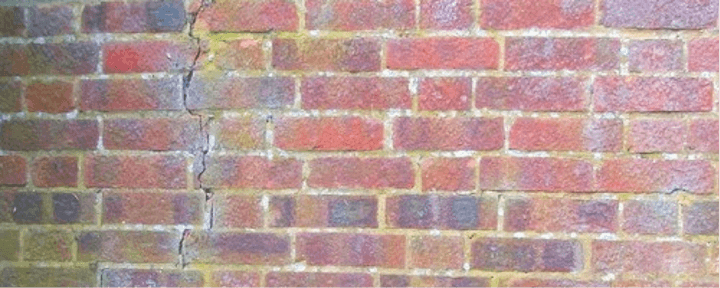
Vertical Cracks in External Walls
Vertical cracks usually occur in foundation walls when in that location is bereft support beneath. The principal reason for this lack of support is when the soil beneath the foundation has not been properly compacted and compresses or fifty-fifty washes away.
The post-obit is an instance of a vertical crevice:
Stepped Cracks in walls
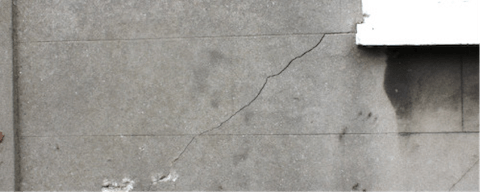
Stepped cracks usually follow mortar joints and are most common virtually the corners of buildings. They usually occur through wall movement related to foundation movement including subsidence.
The following is an instance of a stepped cleft:
Horizontal Cracks in walls
Horizontal cracks in external walls are e'er a result of wall tie corrosion. But don't worry - we have a complete guide that takes you through identifying and replacing corroded wall ties.
Why Are My Walls Cracked?
Cracks in walls can occur for a number of reasons. With new build houses, cracks can appear as the business firm 'settles' (settlement of soil due to the weight of the building). In older properties small-scale cracks can be adequately mutual equally building materials compress overtime. We take divided the main causes of cracked walls into structural and environmental factors:
Structural explanations:
- Subsidence – Subsidence is the down motion/sinking of the basis that supports a building. These changes in footing conditions under and around a building tin crusade walls to move and cracks to appear. Subsidence is more common in areas with clay soil (mainly in the South of England), which can shrink in dry out weather. Sandy and silty soils in the foundations can experience leaching when minerals get done away. For more on Subsidence, read this guide from the ABI.
- The shrinking, drying out and degradation of construction materials similar timber, plaster, and concrete.
- Structural failure – if an element of your business firm has been built incorrectly and later fails then this can crusade cracks to appear in your habitation.
- Corrosion of wall ties.
- Failure or harm of timber lintels over windows and doors.
- Mining – in former coal mining areas subsidence can occur.
- Heave - refers to upward ground movement equally soil expands due to an increment in moisture content. When older trees and shrubs are removed, the ground can swell up equally the moisture the tree had previously removed builds up.
Environmental explanations:
- Thermal expansion – this usually affects long or alpine brick walls and the overall superstructure of the building. Cracks occur when the brick work is exposed to summer estrus and there is a lack of sufficient control joints or expansion joints.
- Leaks – over time leaks tin can cause water to become into the return and for walls to scissure.
- Freezing – ice can touch on the render.
- Disuse of materials.
- Moisture and temperature changes – significant changes in temperature and moisture similar driving rain.
- Vibration from heavy traffic.

Identifying Cracks in Internal Walls
Internal wall cracks are just equally common as those found on the exteriors of a house. Some can be harmless. You lot may also feel the following types of internal crack in your dwelling house:
Internal Cracks in Plaster Walls
Cracks in plaster walls tin can occur if the plaster stale too speedily, if it was mixed incorrectly or equally part of environmental alter (like temperature/wet) in your home over time. These types of cracks can be resolved with simple repairs.
If the cracks return, are more than than 5mm wide and/or there are corresponding cracks on the external wall then it could suggest wall motion and structural problems. These will demand to be investigated.
Cracks around Windows and Doors
If you have cracks around a window or door, and then these can exist downward to the failure of an one-time timber lintel or a shift in the foundations. Conversely, if the house has been recently built, the timber volition still exist fairly fresh and may incorporate a high moisture content. Over time as this moisture evaporates, the timber elements volition change, possibly resulting in cracks around windows and doors.
Hairline cracks
Diagonal cracks across the upper parts of the wall (hairline cracks) are unremarkably an indication of a house settling in. Old houses can shift and motility over fourth dimension as temperatures fluctuate. This tin can issue in small cracks actualization as the building adjusts to these minor changes.
Subsidence cracks internal walls
Subsiding walls are usually the crusade of more serious internal cracks. They occur when the footing supporting the foundations changes, resulting in an uneven pressure distribution across areas of the building. Internal subsidence cracks volition usually occur around doorways, windows and any weak signal.
How to Repair Cracks in Walls
There is an inexpensive and highly effective way of repairing cracked walls called crack stitching. With a crack stitching kit you tin repair vertical and stepped cracks to protect the structure of your home. Yous will need to follow instructions closely when repairing cracks in walls.
What is Crack Stitching?
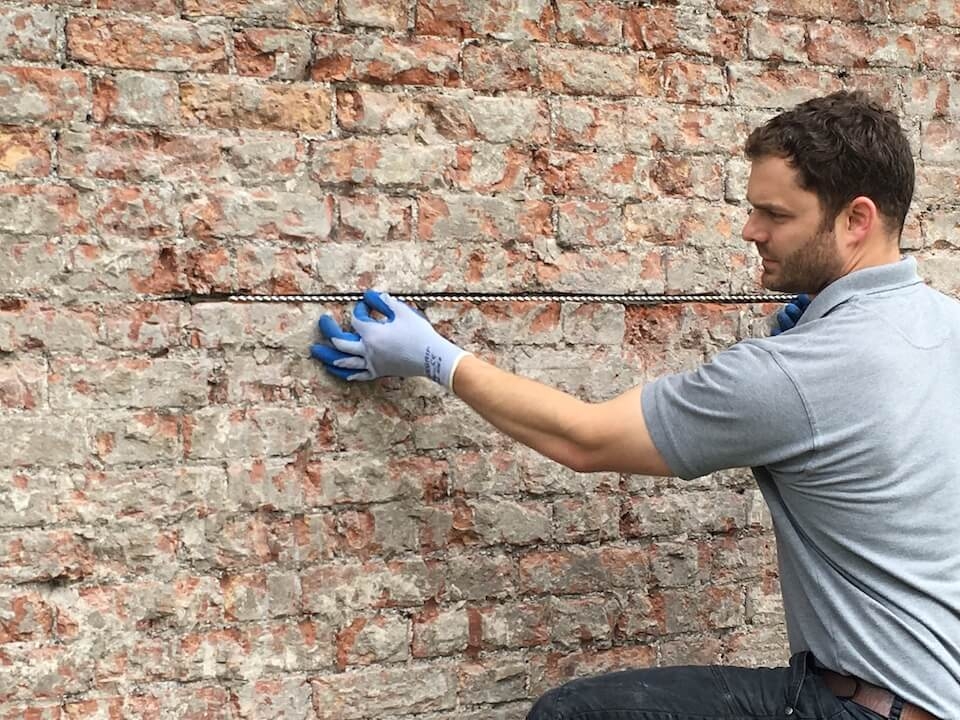
Cleft stitching is a permanent solution to cracks in masonry walls. It involves embedding stainless steel helical confined into horizontal slots into the mortar bed joints of your wall to restore structural integrity.
When practise I need Crack Stitching?
If you have identified and resolved the underlying issue that is causing the cracks in the wall to announced, you are and then a position to repair the cracks in your walls. Even if you accept smaller cracks, it is worth repairing them sooner rather than afterward as water ingress from leaks or driving rain can make the problem worse. Only in one case the root cause of the cracks has been resolved yous can progress with cleft stitching.
How do I Utilize Crack Stitching
1. Cut a slot in the mortar bed just over 500mm either side of the vertical crack and to the correct depth, dependent on the wall thickness (see the chart below).
| Wall Thickness | Depth of Slot | Depth of Bar |
| 102mm | 30mm | 20mm |
| 215mm | 40mm | 30mm |
2. Ensure the mortar is completely removed to reveal the top and bottom faces of the masonry. Remove all loose material (you can apply a blow out pump) and then flush the joint with water. Normally vertical spacing is every four - 6 brick courses but check with a structural engineer if in dubiousness.
3. Mix the PermaCEM Ballast Grout thoroughly using the paddle mixer provided and load into the gun. Pump the grout to the back of the slot in a continuous fifty-fifty bead to approximately 2 thirds of the slot depth.
4. Push button the helical bar firmly into the grout, making sure that the bar extends 500mm either side of the cleft.
five. Apply a second bead of grout into the slot making sure that the bar is completely covered and with the trowel provided force the grout into the slot until information technology is approximately 10mm from the surface and ensuring that the bar and grout are firmly packed.
6. End by making good the bed joint and filling the vertical cleft with an appropriate filler to friction match.
Read our full How to Guide on Scissure Stitching.
Tips
If two or more cracks are close together then confined can be lapped (overlapped) ensuring that the bar extends 500mm either side of the outer cracks and that the laps are at least 500mm.
Helical bars should be aptitude and bonded at least 100mm around corners when cracks are within 500mm of the corner or a reveal etc. This system can exist used for rendered or plastered walls.
Crack Stitching Products: What I Need to Repair Cracks in Walls
Permagard sell specialist crack stitching kits, which provide all you lot demand to repair cracks in your wall. Our kits incorporate helical spiral bars, special grout, a mixing paddle, a mortar gun with nozzles as well equally a trowel. Permagard offering both a standard crack-stitching kit and a heavy-duty kit for larger cracks.
Permacem Grout – grout the steel confined into identify using Permacem Grout. This shrink compensated grout with added polymer additives which sets around the helical bar and develops compressive strength rapidly to forestall centric deflection of the helical bar under load atmospheric condition.
Products
i. Crack stitching kits
2. Heavy duty Crack Stitching
Permagard – Over 30 years' property maintenance experience
Permagard are proud of our technical team who are available to advise you lot on all aspects of crack stitching. Whether y'all are a specialist installer or desire aid with installation our technical advisors are here to assistance. Requite united states a call today on 0117 982 3282.
Farther Reading
What are Helical Bars?
How to Guide: Scissure Stitching
Source: https://www.permagard.co.uk/advice/how-to-repair-cracks-in-walls
0 Response to "How To Repair Horizontal Cracks In Walls"
Post a Comment