

What Soldering Wattage Do I Need For Guitar Repair
Photograph 1 — The essentials: a depression-watt soldering iron, a stand, a small damp sponge, and a roll of "electronic silver solder" similar this .020" 60/forty can/lead rosin flux solder from Kester.
Learn to solder like a pro in this easy-to-follow demonstration.
Given the DIY nature of this effect, we thought it would be advisable to address good soldering technique. If y'all're willing to invest a few bucks in some small tools and spend a little fourth dimension practicing the basics, y'all can learn to wire up guitars, stomp kits, speaker cabinets, and fifty-fifty do some simple amp mods. One time y'all understand the fundamentals, you tin can relieve money and derive a lot of satisfaction from working on your ain gear.
The tools.
Yous'll want a decent soldering pencil (a small type of soldering iron) rated at least 25 watts, but no more than sixty watts. (Many guitar techs similar a 30-watt soldering iron for working on guitars and amps, and a fifteen-watt atomic number 26 for working inside stompboxes and on delicate printed excursion boards.) You'll too want a stand to hold the hot atomic number 26 when not in use, a damp sponge, and some rosin core solder made for electronic work (Photograph ane).
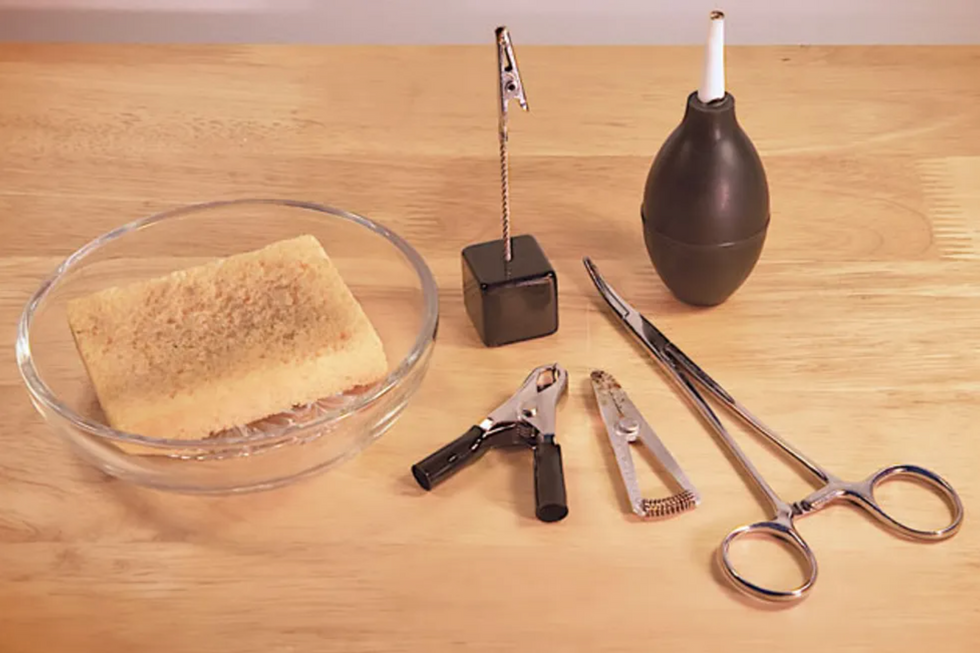
Photo two — If your soldering stand up doesn't firm a sponge, but put a damp household sponge in a glass or ceramic dish. Other helpful tools: a hemostat and small clamps to hold parts still as you solder them, and a "solder sucker" bulb for removing solder.
You should also have some bones paw tools, such as wire strippers, needle-nose pliers, wire cutters, and something to hold the wire in identify while a solder joint cools (Photos ii and 3).
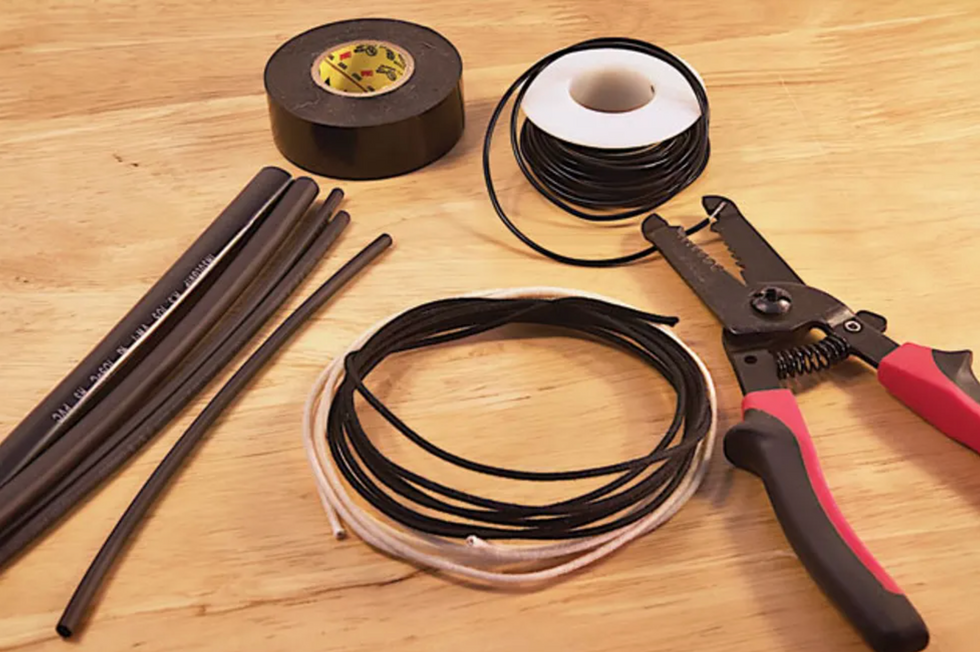
Photograph 3 — In improver to claw-up wire, you'll desire wire strippers. Alternatively, luthier suppliers offer quondam-school "push button-dorsum" wire with a waxed cotton wool jacket (center) that eliminates the need for stripping off the plastic insulation from the end of the wire. Electrical tape and oestrus shrink tubing come in handy when you demand to protect or insulate your work.
At that place are tools sold specifically for property wires and parts, available through an electronics supply house.
Footstep 1: Gear up the Joint
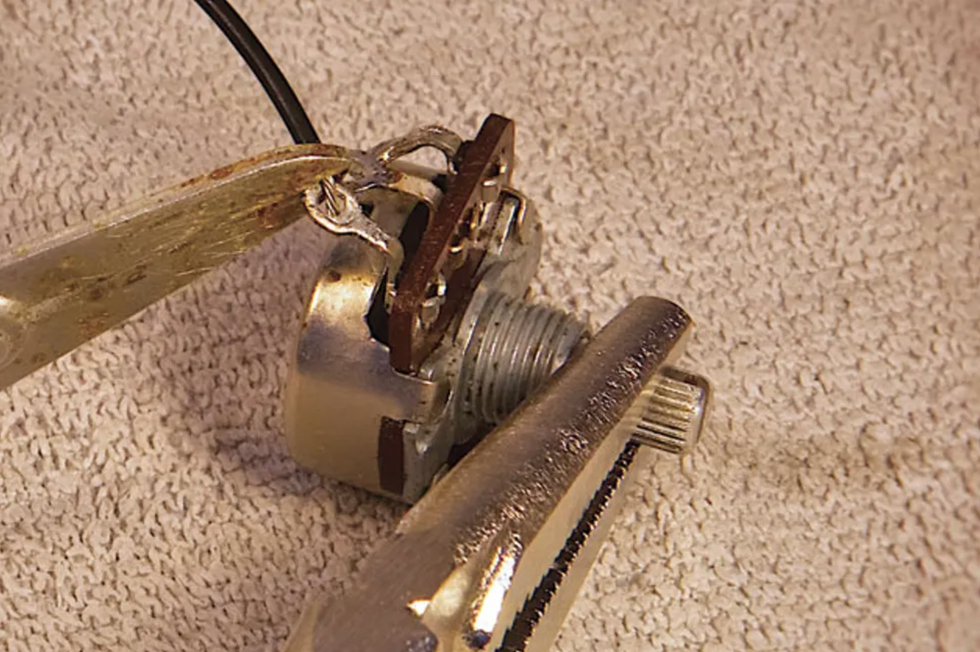
Photo iv — Earlier you effort to solder a connexion, the wire and component must exist secured to assure they remain absolutely motionless. Hither, a spring-loaded rut-sink clamp holds the wire in place while a vice grip gently clamps the pot shaft.
For every joint, y'all need to notice a way to agree the wire in position without using your hands (Photo 4). Wrap the wire through the solder lug in one case to arrive hold tightly on its own, use tape to concur it in place, lay a pair of pliers on the wire to agree it firmly where you want it, or utilise a mechanical soldering help to concord it. Apply whatever works, except holding the wire manually. When you make a solder connection and rely on your hands to agree the soldered wire steady while the joint cools, you volition neglect—no human hands are steady enough to concur annihilation perfectly all the same, and you lot want the wire to remain absolutely motionless while information technology cools. If at that place is movement, the result will be internal fractures in the solder.
Footstep two: Clean the Tip
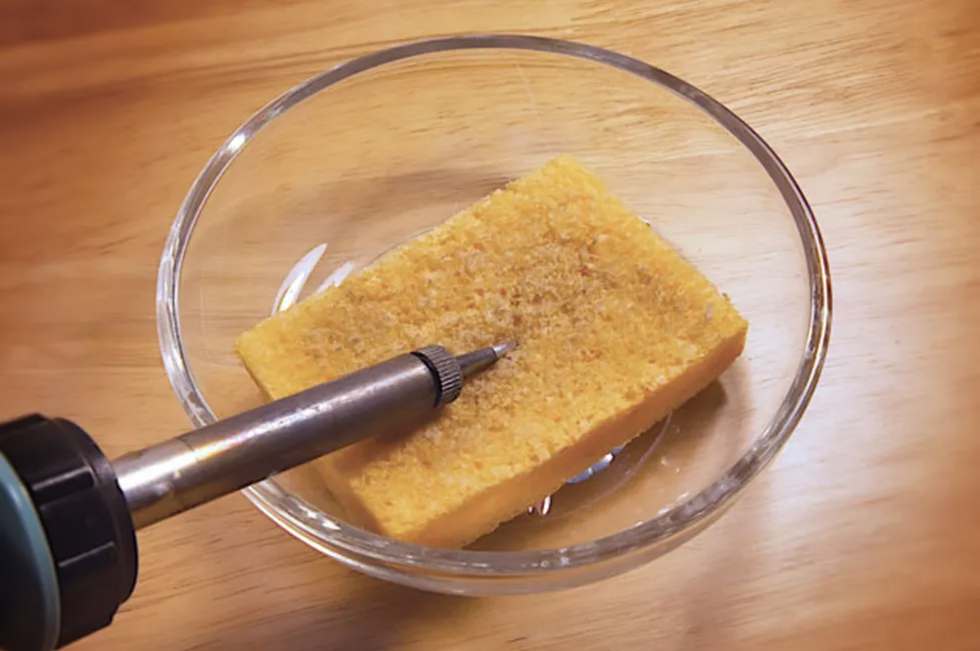
Photograph 5 — Wipe the hot tip with a clammy sponge to keep it clean.
The tip must exist cleaned before each and every joint—you can use the damp sponge for this (Photos 5 and half dozen).
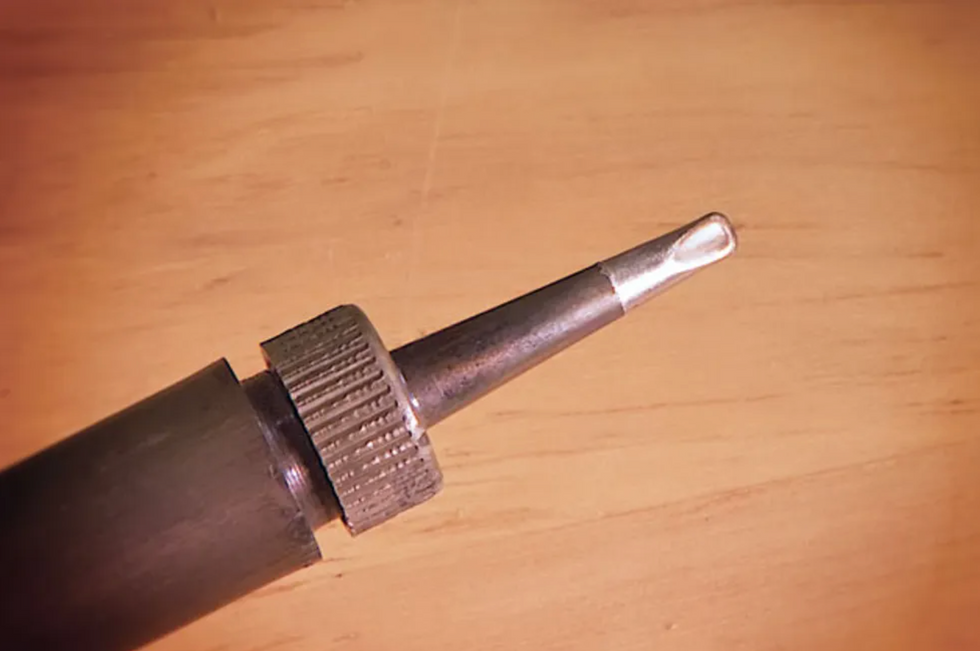
Photo vi — A clean, dross-free tip looks shine and shiny.
Solder produces a by-product called dross very, very quickly, and the dross fouls the tip, preventing good heat conduction and introducing waste product material into your solder joints.
Footstep 3: Tin the Tip
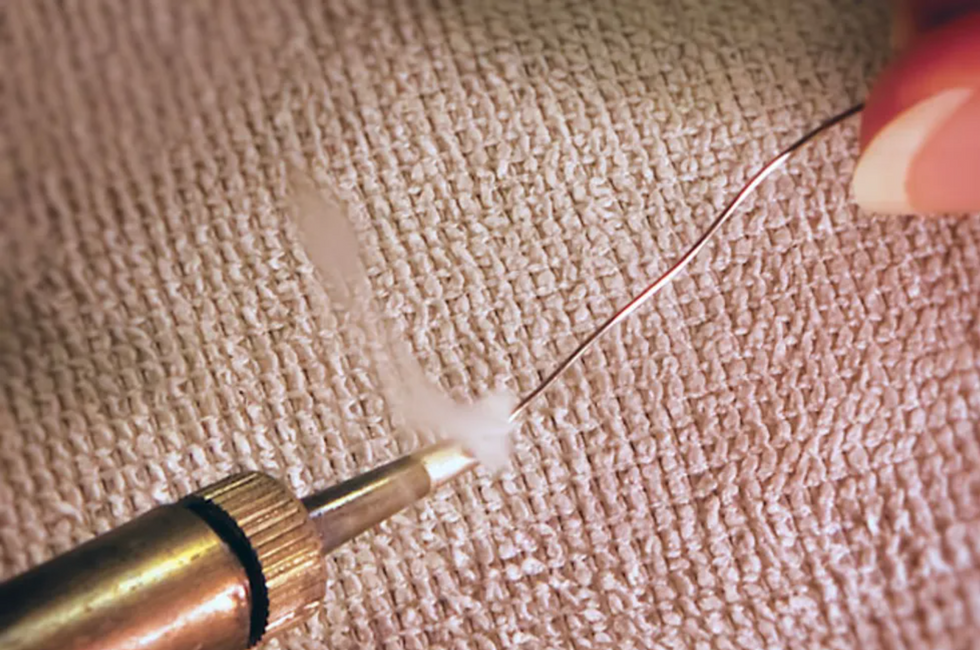
Photograph 7 — Add a pocket-size amount of solder to a freshly cleaned tip just before you solder a connection. When yous see this telltale puff of smoke, pull the strand of solder off the tip, milk shake off any excess, then move quickly to the articulation.
Immediately before yous get on the joint with the rut, add fresh solder to the tip of the iron to "tin" it. Just feed solder directly onto the tip so it's completely coated (Photo 7). A tinned tip will provide much better heat conduction than a tip that'south make clean just not tinned.
Step iv: Remove the Excess Solder
Shake off the excess solder later tinning—you want the tip coated, but not dripping. I have a burn-resistant container beside my soldering bench, and after tinning I tap the barrel of my iron on the edge of the container to knock excess molten solder into it. Y'all can use any burn down-resistant container for this, such as a tin tin or ceramic bowl, but apply care not to start a fire. Because solder melts at such a low temperature the risk of a burn is very low—molten solder is unlikely to ignite even highly flammable materials like paper—but use intendance anyway!
Step 5: Become on the Joint Right Abroad
As soon as you've removed the excess solder from the tip, get right on the articulation. By "joint," I mean the wire and the solder lug, or the wire and the back of the pot, or any it is you're soldering. Dross will get-go to form on the tip very quickly, so as soon equally the tip is prepared, get to work.
Step 6: Oestrus the Joint
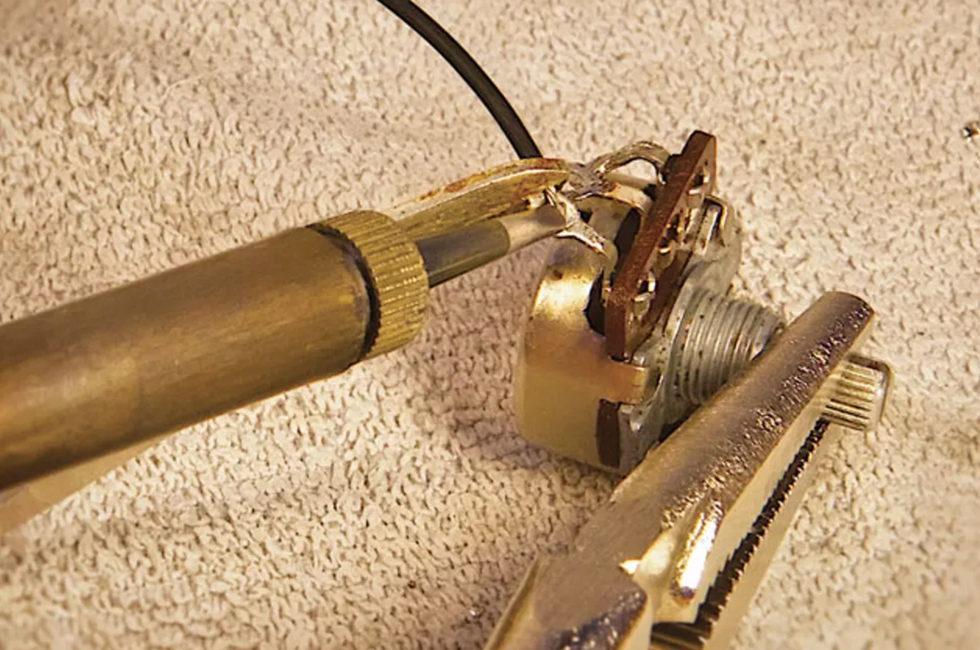
Photo 8 — Gently press the iron's hot tip confronting the joint to heat it before you bring the solder into the equation. The goal is to make the articulation itself hot enough to melt the solder.
Rut the joint, not the solder (Photo viii). You want the articulation to be hot enough to melt the solder. It's a given that the iron is hot enough to melt information technology—but feed a fiddling onto the tip and you'll see—but you also want the joint itself to be hot plenty to do the same.
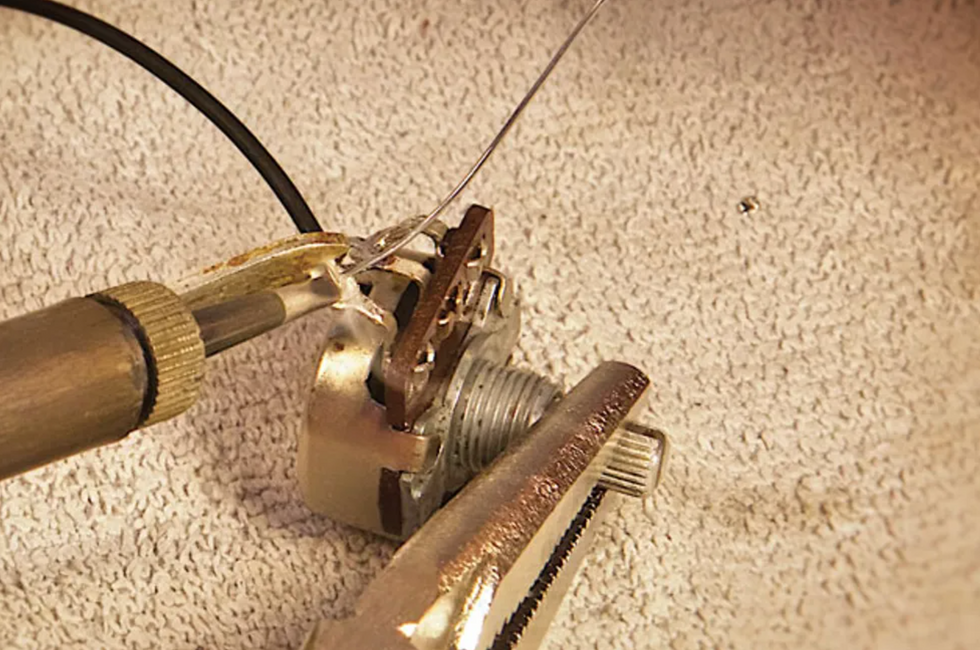
Photo 9 — While holding the tip against the joint, feed the solder onto the heated articulation, not the soldering iron tip. Here the emerging puff of smoke indicates the solder is melting.
If you feed solder onto the articulation without information technology touching the iron (Photo ix), the solder will cook and exist attracted right to the articulation. You can watch the solder actually wick out onto the surface you're soldering to—this is what you want.
Step 7: Get off the Articulation
As presently as the solder has flowed onto the articulation properly, remove the heat from the joint. Most components can stand a fair amount of heat, only some are more susceptible to damage than others, so in that location'due south no need to button your luck. Pots are adequately durable (unless it'south a cheap pot), so information technology's highly unlikely you lot'll harm i by trying to solder a wire to its dorsum. But once more, there's no need to push your luck, and so every bit soon as y'all've completed the articulation, pull the fe away and permit the joint absurd with the components remaining motionless.
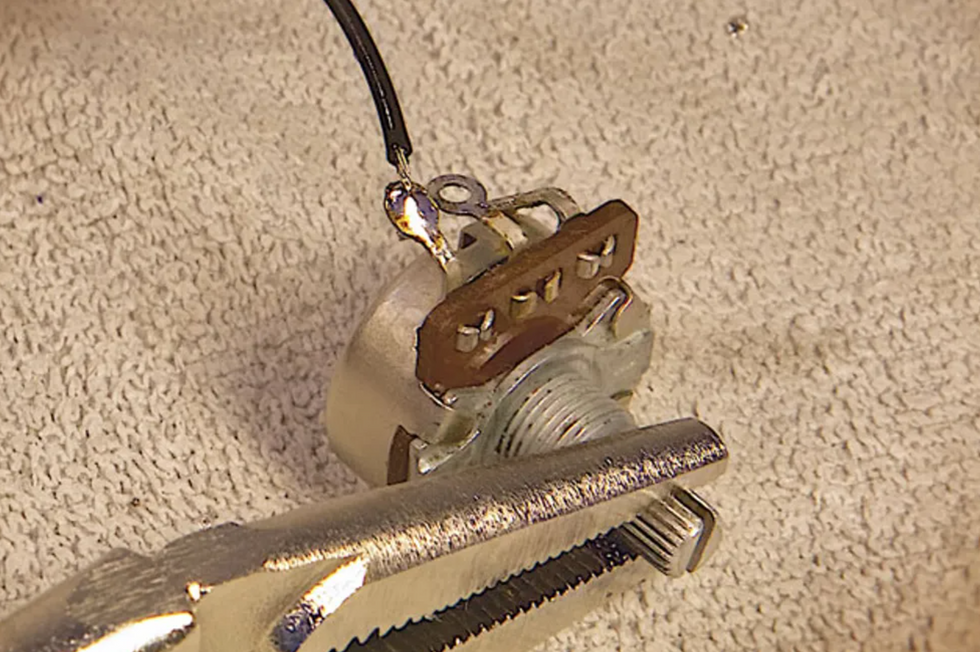
Photo 10 — When the molten solder has flowed into the joint, pull abroad both the solder and iron. Proceed the joint motionless as it cools and don't blow on information technology—the wet in your breath will enter the cooling connectedness and potentially cause information technology to fail.
If y'all're soldering to a ring-shaped solder lug, then yous'll desire to fill it completely with solder (Photo 10). This will maximize the mechanical force of the joint.
Like most skills, soldering proficiency is acquired through practise. Employing good technique will permit you to become competent all the more than quickly, then follow these steps, and you lot'll exist soldering like a pro in no time. You should probably exercise on projects that aren't expensive or mission critical—you might desire to think twice virtually rewiring your only guitar before that gig with Clapton tonight. Only if yous keep at it, you'll be one step closer to being a consummate DIY'er.
Two Ways to Ameliorate Your Soldering Projects
After you chief the nuts, there are two more skills to add to your bag of tricks: removing old solder and installing heat compress tubing. In that location are plenty of occasions where you'll wish yous could remove erstwhile solder and re-use a part. For example, you lot might have rescued a volume or tone pot from a previous mod or project. If it's a high-quality pot, like those from CTS, why toss it and buy a new replacement when you tin put the erstwhile 1 dorsum into service? It's easy to reverse the soldering process and remove old solder and bits of wire. You simply need a solder removal tool. At that place are several types, including disposable braided wire that's designed to wick molten solder away from a joint, and various vacuum pump tools and "solder suckers." I prefer a unproblematic rubber bulb with a heat-resistant Teflon tip.
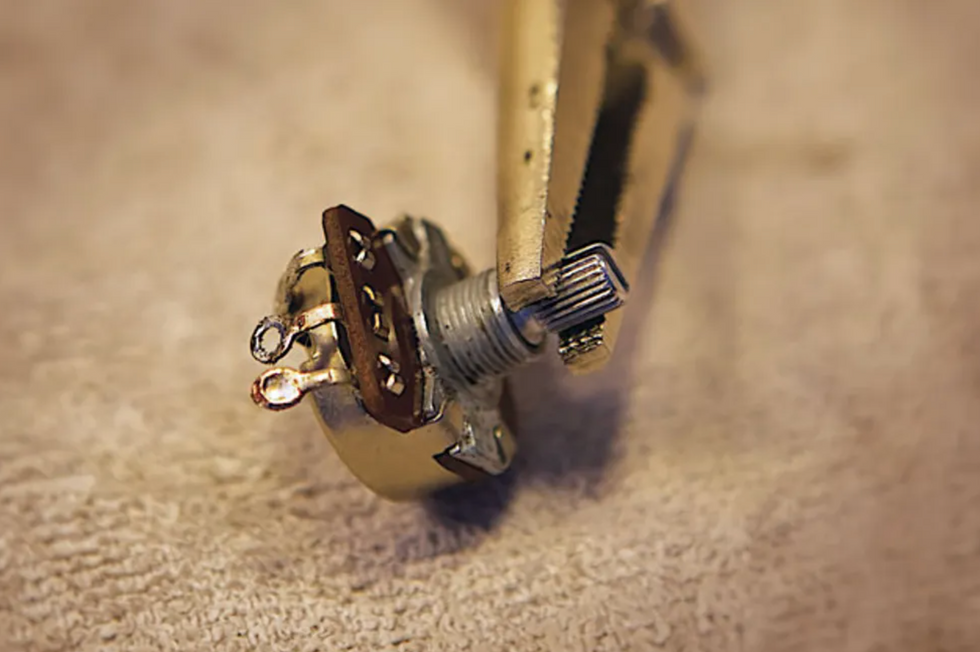
Photograph xi
Hither's how it works: Stabilize your component, in this case, a pot (Photo 11). See how one lug is filled with solder? Let's brand that go bye-adieu. Employ estrus to the lug with a freshly cleaned soldering-iron tip.
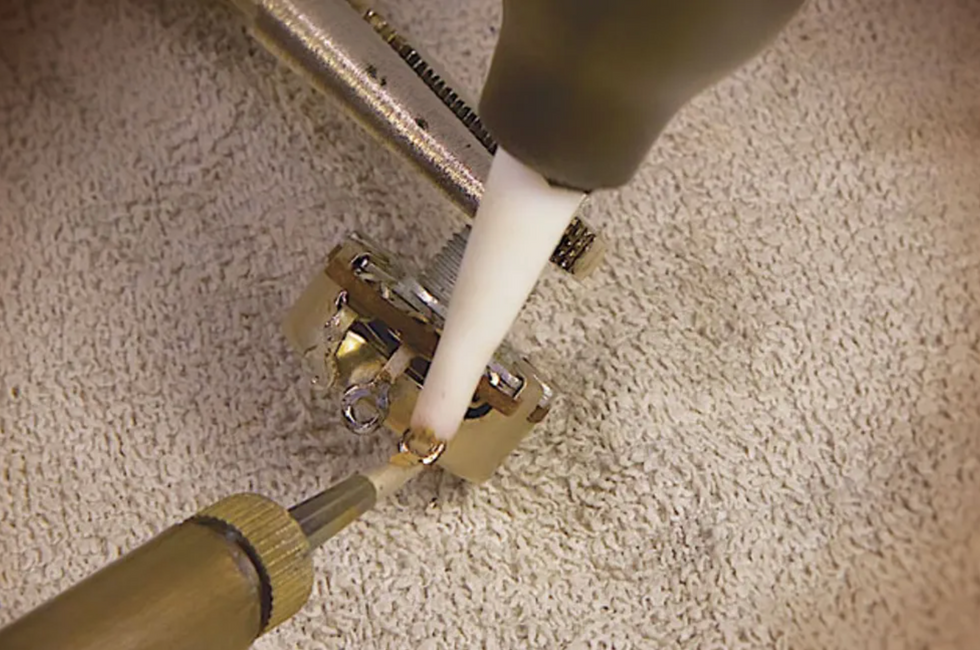
Photo 12
When you lot see the solder turn shiny and molten, concur the bulb away from the lug, squeeze and hold the bulb, and then bring its tip to the lug and release the seedling. Fffffft! The molten solder goes up the tip and into the bulb (Photograph 12).
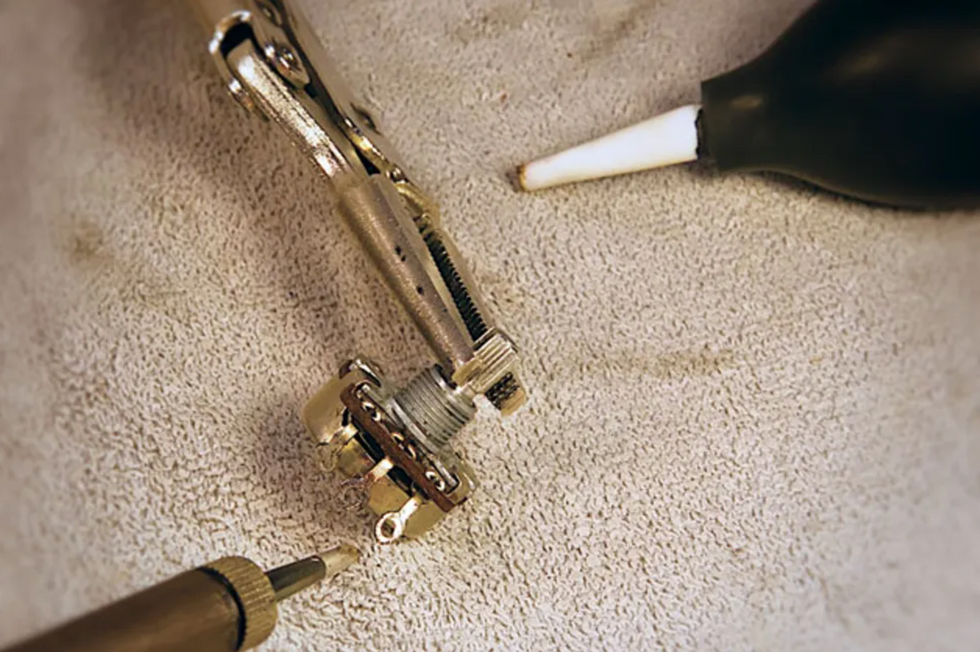
Photograph thirteen
Await at that—a squeamish make clean lug gear up for its next mission (Photo 13).
Tip: It'south good to recycle pots and parts, but never endeavour to reuse old solder. Clean it off and beginning fresh.
In case you're wondering what happens to the old solder, every few months you simply work the tip out of the bulb, shake the collected cold solder chaplet into the trash, and reinsert the tip into the bulb. Good to go.
When you're working with wire and electronics, you'll often encounter instances where you lot need to insulate a connection from other wires or components. For example, you want to install a favorite old pickup into some other guitar. However, the pickup leads accept been cut back over the years and now they won't reach the intended switch or pot, which ways it'due south fourth dimension to splice short extensions to the pickup leads. No problem, except if the exposed wires touch each other or other components, they'll create a short and yous'll hear only silence (or an abrasive hum).
Electrical record will exercise the job to insulate the splices, but heat compress tubing—aka heat shrink—offers a more elegant solution. To brand this work, y'all'll need a heat source. Some folks employ a lighter, but I prefer a estrus gun considering I similar to avoid open up flame in my workshop. Heat guns aren't expensive and they become the job done efficiently and safely.
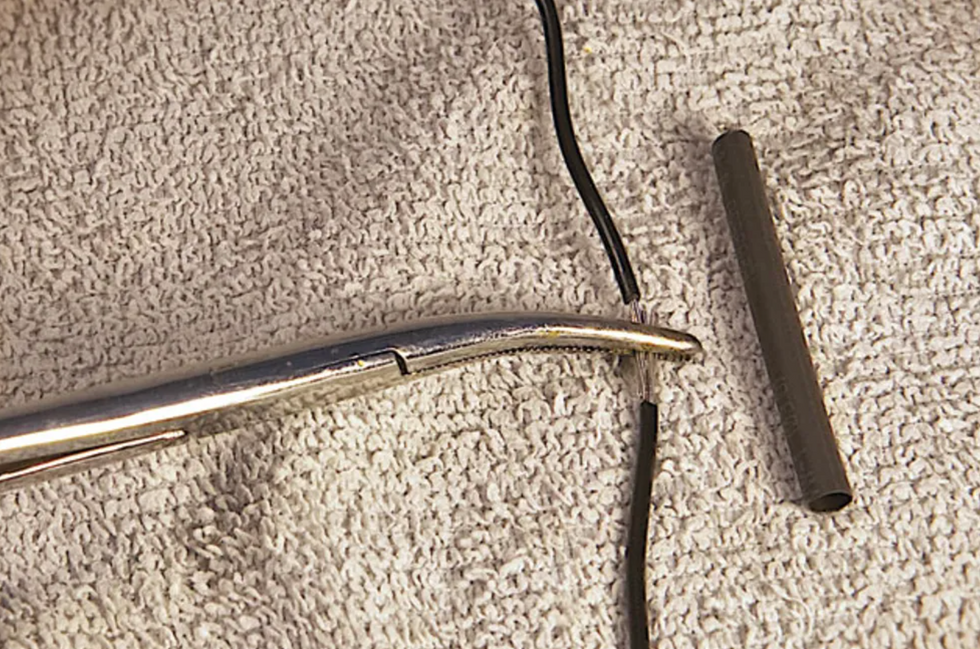
Photo 14
The details: Designed to slide over wire of different gauges, rut shrink comes in diverse diameters. After you select the right bore to comfortably skid over your wire, cut off a piece that volition straddle the solder splice or joint you plan to encompass. The pros suggest a length that's about three times every bit long as the exposed section. Use hemostats or a clamp to temporarily concur the ends together while yous gauge the length you'll need to cut (Photograph 14).
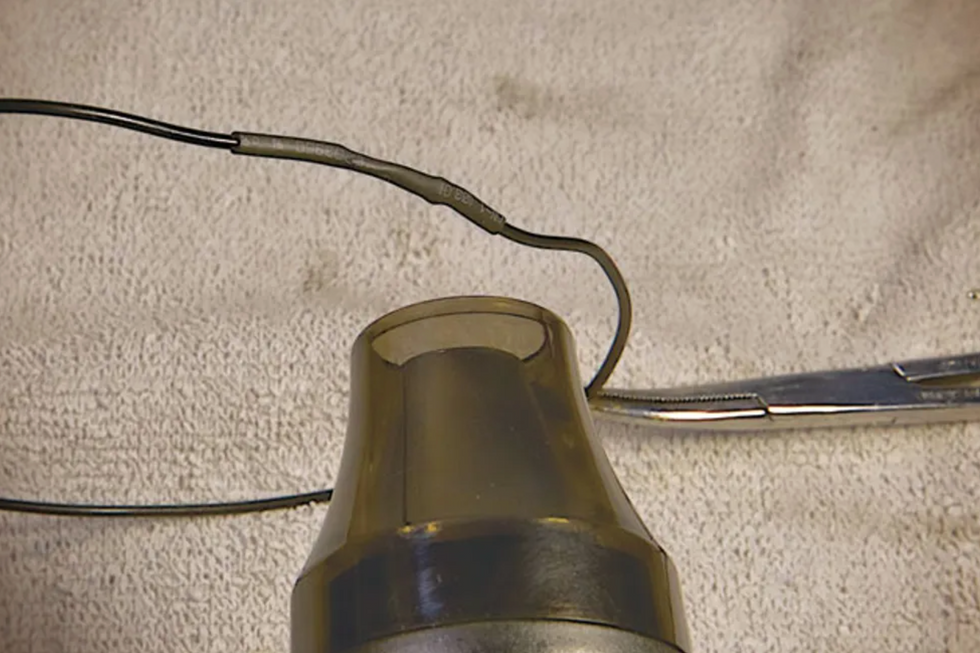
Photograph 15
Next, remove the clamp, slide the rut compress over one end of the wire (continue it far abroad from your hot iron) and solder the wires. When the solder has cooled, slip the heat shrink over the new joint, centre it, and fire up the heat gun. The tubing will start to immediately contract around the joint (Photograph xv). Don't worry, air from the heat gun doesn't get hot enough to compromise the solder articulation. One time the tubing has completely closed up around the wire, yous're done. The joint now has a tough, new pare to protect it. —Andy Ellis
[Updated 1/xiii/22]

Source: https://www.premierguitar.com/diy/guitar-bass-mods/guitar-soldering
Posted by: smiththerhatim.blogspot.com
0 Response to "What Soldering Wattage Do I Need For Guitar Repair"
Post a Comment